Multi Stop Route Planning Across Australian Metros
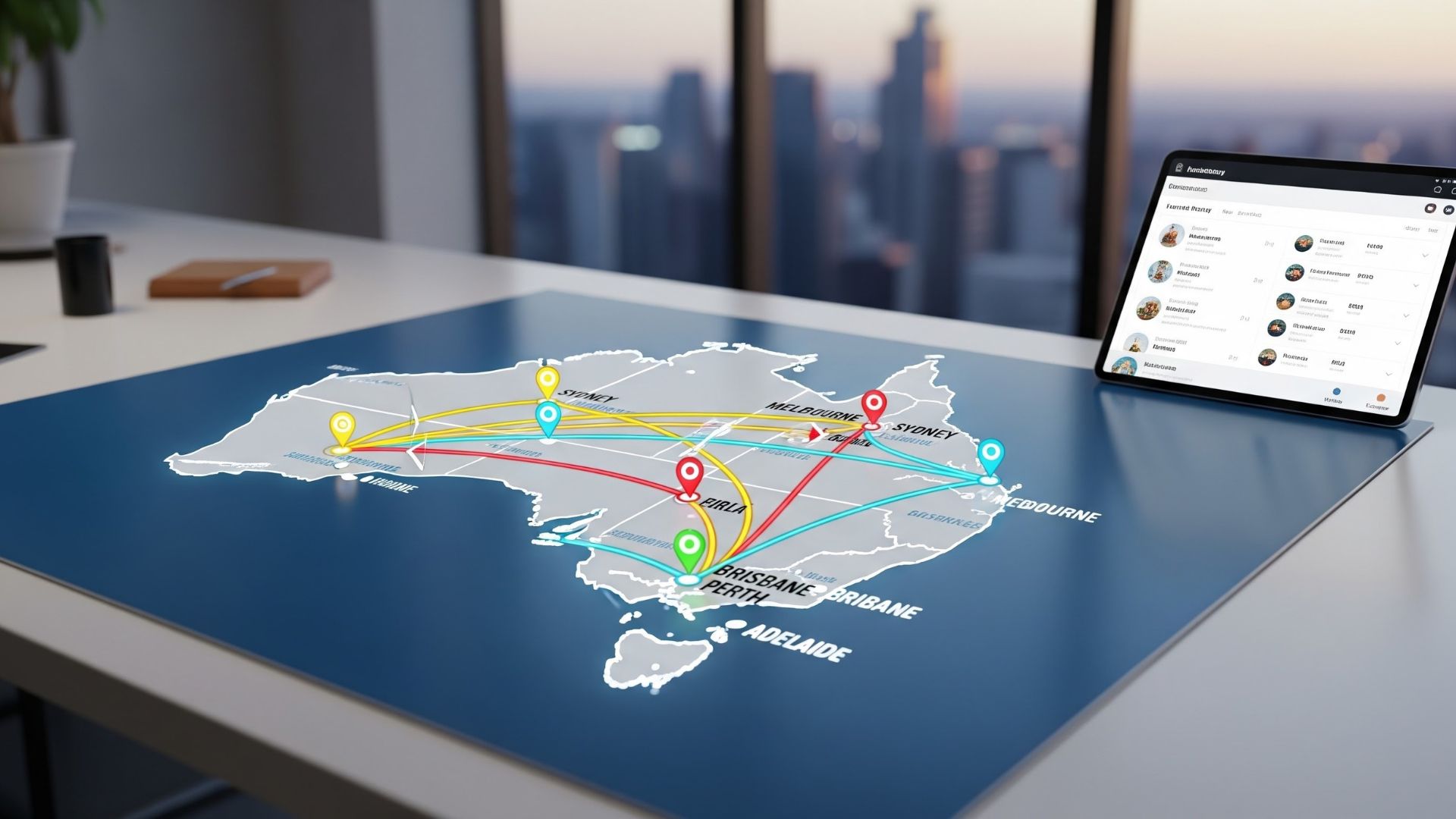
Managing deliveries across Sydney's sprawling suburbs or navigating Brisbane's peak-hour gridlock with a dozen stops on your run sheet isn't easy without sound route planning.
For logistics teams, couriers, and field service operators, the difference between a profitable day and a frustrating one often comes down to how well your routes are planned.
But having a plan no longer means that you must sit with a pencil and a map. It also doesn't mean just trusting your drivers.
We now live in a world of technology. Specifically for you, we live in a world of route planner applications and software.
Why Multi-Stop Route Planning Matters in Australian Cities
In 2026, Australia's urban centers have become a pressure cooker for logistics.
With Sydney and Brisbane consistently ranking among the most congested cities globally, route planning is no longer just an "admin task" as it is a critical survival strategy for your bottom line.
Industry research shows that Australian metro delivery costs rose by an average of 9% year-on-year through 2025, driven primarily by fuel volatility, congestion, and labour pressures. Businesses that adopted multi-stop route optimization saw cost increases limited to just 2-3%, demonstrating the tangible financial protection that smart planning provides.
The 2026 Reality: Sydney and Brisbane Traffic
The data for 2026 is sobering. In Sydney, commuters are losing over four days a year to gridlock, while Brisbane has seen congestion levels spike as population growth outpaces infrastructure.
More than an annoyance, it's a veritable hole-in-your-pocket, where high fuel costs and the opportunity costs of idleness thrive.
So if you're running a business where your drivers go to multiple destinations and need the quickest route, then a route planner app is absolutely needed.
The Hidden Cost of "Guesswork" Planning
When you rely on manual planning or a driver's "gut feeling," the inefficiencies compound across the fleet:
- The Fuel Burn: Constant stop-start traffic in Sydney's inner west or Brisbane's river crossings can increase fuel consumption by up to 20% compared to a steadily flowing route.
- Vanishing Productivity: Poorly sequenced stops lead to "crisscrossing" suburbs. Simply grouping deliveries geographically can save a single driver several hours of road time every week.
- The Maintenance Trap: Heavy traffic accelerates wear on brakes, tyres, and transmissions. A vehicle stuck in 27km/h crawl-traffic for hours a day requires significantly more frequent servicing than one running optimised routes.
- Safety and Fatigue: Longer, more stressful days in traffic don't just frustrate drivers: they increase the risk of incidents. In 2026, fatigue management is a major focus for Australian regulators, and poor routing is a primary culprit for extended shifts.
Ultimately, you should not rely on your drivers to find the best route. If they already have to manage getting to multiple locations on time, then it's better to use a route planner app to take the guesswork out.
What Benefits does an Optimised Multi-Stop Route Planner Bring?
Investing in proper route optimisation delivers measurable improvements across your operations.
We've seen certain commonalities across the Australian businesses that we partner with. Here are some of them:
Direct Cost Savings
Optimised routes are the fastest way to protect your margins against rising operational costs.
Furthermore, we see that, when every stop is sequenced perfectly, drivers complete more deliveries in fewer hours, which reduces expensive overtime pay and balances workloads to prevent driver burnout.
Time Efficiency for Multiple Stops
In high-density metro areas, manual planning is a recipe for delay.
For couriers and sales teams, this often translates to 1-2 extra stops per day, effectively increasing your total capacity without the need to add new vehicles to the fleet.
Real-Time Route Planner Adaptableness
Static plans break the moment they hit the road.
This dynamic rerouting also allows for on-demand flexibility; if a customer cancels or a high-priority "rush" order comes in mid-day, the AI can slot the new stop into the existing route without disrupting the remaining schedule.
Australian Enterprise Scalability
Whether you are a local florist or a national logistics giant, the tech grows with your business.
These tools also sync directly with your CRM and ERP systems, ensuring that as your order volume spikes, your planning remains automated, accurate, and error-free.
How Do Route Optimising Tools Compare for Australian Operations?
In 2026, the Australian routing landscape is split between agile "last-mile" apps and heavy-duty compliance platforms.
Depending on whether you're dodging traffic in a van or navigating bridge heights in a B-double, your "best" tool looks very different.
Locate2u
Key Features: AI-powered route optimization, real-time driver tracking, automated SMS notifications for customers, and a live "share tracking link" that shows the driver on a map.
Best For: Courier and service businesses (plumbers, electricians, food delivery) in Sydney, Melbourne, and Brisbane that need to add new "urgent" jobs into a driver's schedule mid-day without manually recalculating everything. See how Husk Bakery increased deliveries by 30% with Locate2u.
Telematica (Geotab/Netstar)
Key Features: Integrated GPS hardware, AI dash cams, fuel management, and Electronic Work Diaries (EWD). It focuses heavily on "Chain of Responsibility" (CoR) compliance.
Best For: Larger fleets and waste management operations where stop clustering and reducing "idle time" at traffic lights are critical for lowering the total cost of ownership.
RouteXL
Key Features: A "freemium" web-app that optimizes up to 20 stops for free. It's a no-frills, browser-based tool that calculates the fastest itinerary sorting in seconds.
Best For: Small business owners or independent couriers who need a quick, fuel-saving route order for a dozen stops without committing to a monthly subscription.
Maptitude
Key Features: Deep Excel integration, "territory balancing" for sales teams, and logistics tools that factor in driver rest requirements and fixed time windows.
Best For: Regional distributors and long-haul metro deliveries where you're managing complex "multi-day" schedules and need to ensure your drivers stay within legal fatigue management limits.
What Are the Best Practices for Planning Metro Routes?
Technology alone unfortunately won't solve every routing headache.
In 2026, the real pros are the ones who combine high-end optimisation tools with the kind of common-sense operational habits that keep a fleet from getting stuck in the mud (or the M1).
1. Avoid peak hours (the "Sydney-Brisbane" rule)
In 2026, rush hour in our major cities is tighter than ever. If you're in Sydney, you basically want to treat the 7:00-9:00 AM and 4:00-7:00 PM windows as "no-go" times for major arterials.
Brisbane isn't much better, congestion on the river crossings peaks between 8:30 and 11:00 AM, especially on Fridays.
If you can schedule your heavy deliveries for the 11:00 AM to 2:00 PM sweet spot, you're not just saving time; you're saving fuel and a massive amount of driver frustration.
2. Cluster and prioritise like a pro
The "zig-zag" is the enemy of profit. You should be grouping nearby stops together, but you also have to factor in the type of job.
A quick parcel drop at a loading dock is a five-minute stop, but an equipment installation with a signature could take an hour.
Your route planning needs to account for those "long-stay" stops so the rest of your afternoon doesn't end up in the bin.
3. Use real-time data for "active" rerouting for the quickest route
A static route printed out at 6:00 AM is useless by 9:00 AM when a breakdown blocks the Gateway Bridge. In 2026, you need tools that pull in live traffic and weather data.
This allows for dynamic rerouting, because if an accident happens ten kilometers ahead, your driver is automatically pushed onto a side street before they even see the brake lights.
4. Test before you go fleet-wide
Don't overhaul your entire operation on a whim. Most modern tools offer free tiers or pilots. Start by optimising one or two of your most "painful" routes.
And once you see the reduction in mileage and the improvement in arrival times, you can scale up to the rest of the fleet with the data to prove whether it works.
This is the kind of difference that we provide at Locate2u and can bring to change your Sydney or Brisbane delivery challenges.
How to Get Started with Multi-Stop Planning
Most modern platforms have streamlined the setup into four key phases:
- Input Your Stops: You no longer need manual entry. Most tools allow for bulk-uploading via Excel/CSV or seamless syncing through native integrations with Shopify, WooCommerce, or CRMs like HubSpot and Salesforce.
- Set the Rules: Define your operational boundaries. This includes driver shift hours, vehicle load capacities, and strict "must-arrive-by" time windows.
- Optimize with AI: Instead of manual mapping, AI-driven algorithms process traffic patterns, geographic clusters, and delivery priorities in seconds to find the most efficient sequence.
- Dispatch and Live Tracking: Push the optimised route directly to the driver's mobile app. This provides turn-by-turn guidance and gives dispatchers a live view of progress, allowing for real-time adjustments if a delay occurs.
For more on how dispatch and delivery planning transforms business operations, see our guide on dispatch and delivery planning.
Frequently Asked Questions
How many stops can route planning software handle?
Most route planning software typically handles hundreds of stops per route. While free tiers (like RouteXL) often cap at around 20 stops to give you a taste, paid enterprise versions can scale to thousands of daily deliveries distributed across an entire fleet.
Do these tools work offline in areas with poor mobile coverage?
Yes. Most leading apps allow drivers to download the optimized route and map data before leaving the depot. While real-time traffic updates and live ETA syncing require a connection, the core turn-by-turn guidance will continue to function in "dead zones."
Can route optimisation integrate with existing fleet management systems?
Absolutely. Modern solutions are built with API-first architecture. They connect directly to your existing Telematics, Fleet Management Systems (FMS), and Proof of Delivery (POD) platforms. This creates a "single pane of glass" where data flows from order creation to final signature without manual intervention.
Turn Route Chaos into Delivery Success
Multi-stop route planning across Australian metros doesn't have to mean battling traffic, burning fuel, and disappointing customers.
With the right combination of technology and operational practices, you can transform your delivery operations into a competitive advantage.
Whether you're running a small courier service or managing a large metropolitan fleet, optimised routing delivers measurable improvements to your bottom line while creating better experiences for your customers and drivers alike.
2026 Outlook
According to logistics benchmarks, Australian last-mile delivery volumes are forecast to grow by 14% through 2026-2027, putting even more pressure on metro routing efficiency. Businesses that invest in AI-driven multi-stop planning now will be positioned to absorb that growth without proportional cost increases. The window to build routing efficiency before demand outpaces capacity is narrowing, and the businesses that act first will hold the strongest competitive position in Sydney, Brisbane, Melbourne, and beyond.
If you'd like personalised guidance, explore Locate2u's solutions and uncover quick wins for your fleet.
Related Articles
Logistics Partnerships: Stepping Up to Succeed at Last-Mile Delivery
There is a last mile delivery process issue that most in logistics and delivery understand. It's when a customer places an order, everything is humming along just fine through the warehouse, and then it hits that final stretch...

Training Your Logistics Team for High-Speed Fulfilment
If you're running a logistics operation in 2026, you already know the drill: delivery windows are tighter than ever, orders are piling up and customers just expect to get what they want, when they want it, no questions asked...