Plumbing Software in NZ: What to Look For in Job Scheduling, Dispatch and Van Tracking
Drafted with AI assistance, edited and fact-checked by Sean Flannery. See our editorial policy.
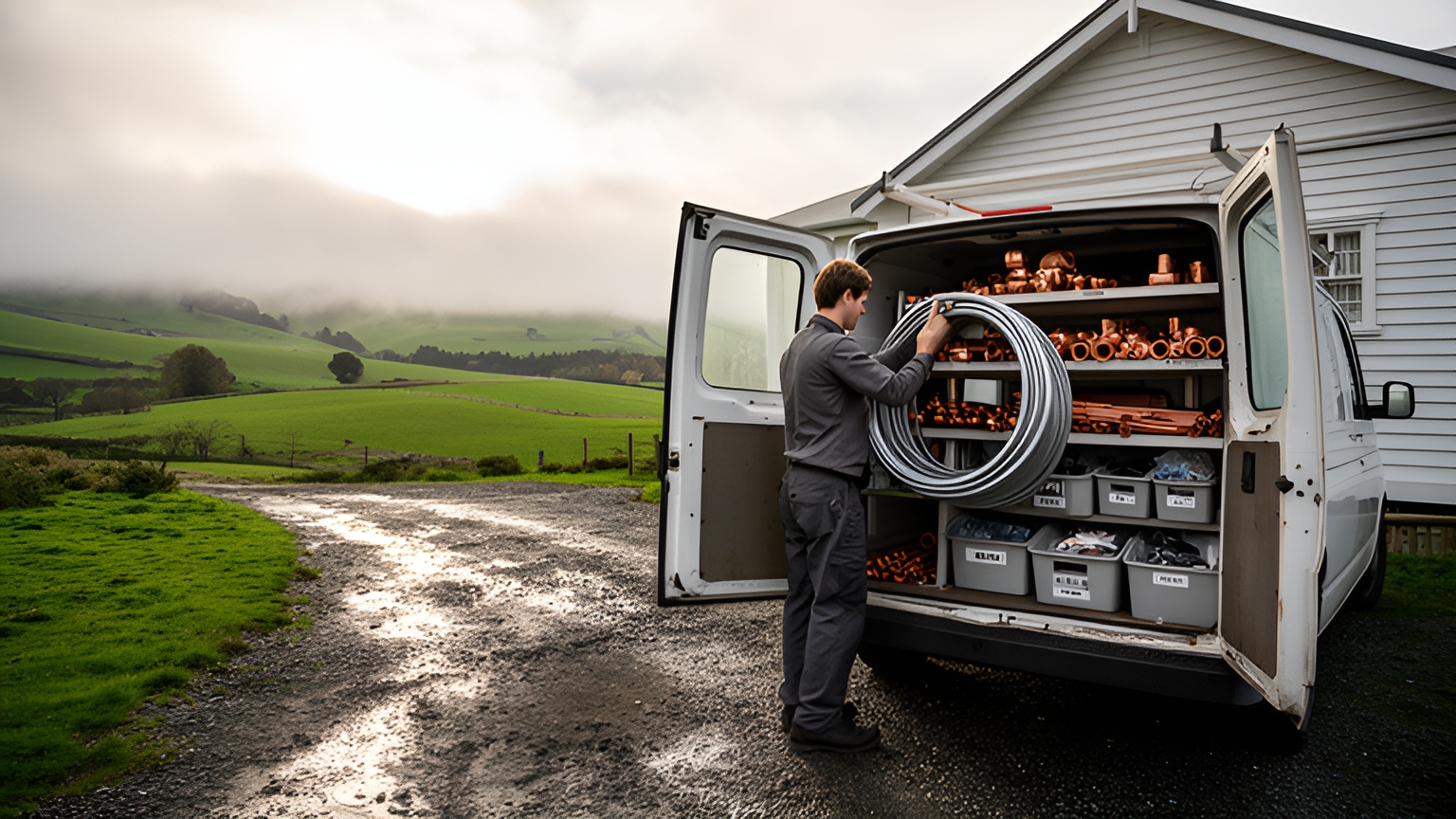
Plumbing software helps a New Zealand plumbing business book jobs, dispatch the right plumber, track vans live and record finished work with photos and timestamps. The most useful setups connect to the tools the business already runs, let urgent call-outs slot into the day without replanning from scratch, and send customers a live arrival link.
That matters in a country where one plumber's day might include a job across the harbour, a lifestyle block at the end of a gravel road and a burst pipe that wasn't on anyone's list when the van left the yard. The checklist near the end of this guide turns that day into tests a business can run with one van over a normal week.
How plumbing software brings the job, the van and the customer into one view
A plumbing office might already run an accounting package, a quoting tool, a shared calendar and a busy group chat.
Where things slow down is the connection between them. A job gets booked in one place, the plumber hears about it in another, and the customer finds out what's happening by ringing the office.
Good plumbing software for scheduling and dispatch closes that gap. It holds the job, the van and the customer in one record that everyone works from.
Plumbing is part of a big industry. Stats NZ reports 81,249 enterprises in the construction industry at February 2025, or 13.2 percent of all enterprises in New Zealand.
Where a plumber works on a site alongside builders and other trades, a clear arrival time and a photo record of finished work help the whole project keep moving. So when comparing tools, weigh what the customer or site contact sees as heavily as what the office sees.
In practice, one view covers three things:
- The job: address, contact details, access notes and the parts it needs.
- The van: where it is, who is driving and which jobs are left today.
- The customer: when the plumber will arrive, and a photo record once the work is done.
Locate2u covers this side of the business: dispatch planning, live tracking, a driver app for the person on the tools and photo-backed proof of completion. Quoting and invoicing can stay in the tools a business already trusts, so the change is about connecting work rather than replacing everything.
For a neighbouring trade's view, see the guide to choosing appliance repair business software.
Why travel time between jobs shapes a New Zealand plumbing day
A plumber earns on site, not in the van. So the order of the day's jobs decides how much of it is spent working.
Auckland Transport's work on the cost of congestion makes the same point about contractors: more time on the road means fewer working hours on site.
City traffic makes this sharper. The NZ Herald, reporting on a congestion study, said Auckland's morning traffic reached its highest levels at about 8am, when it took an average of 19 minutes to drive 10km.
That points to a simple planning habit. Start each plumber close to their first job, and keep cross-city drives out of the morning peak wherever the booking allows.
Geography adds its own twists. Auckland's harbours limit the routes across the city, Wellington's hills slow short trips, and a regional plumber can spend long stretches between farm and township jobs.
Worked example, on assumed numbers: if better job sequencing gave one plumber back 30 minutes a day, at an assumed charge-out rate of NZ$100 an hour over 220 working days, that is NZ$50 a day, or NZ$11,000 of billable time per van per year.
Your own figures will differ. The useful step is to run the same sum with your real rate and a week of real travel times.
This is where plumbing software earns its place. A tool that orders jobs by location and booking window shows the travel cost of a day before it starts, not after.
Some habits help with or without software. Group jobs by suburb or district when the customer is flexible on the day. Offer arrival windows that suit the route, not just the calendar.
And keep a note of how long typical jobs actually take, so the plan reflects the work rather than a guess.
Scheduling that slots urgent call-outs around booked work
A burst pipe or a failed hot water cylinder can't wait until next week. Booked work, though, still has customers expecting a plumber.
The aim is to fit the urgent job in while moving as little of the rest of the day as possible.
That starts at booking. Record what each job needs, such as specific parts, a particular skill or a second person, so an urgent call goes to a plumber who can finish it in one visit.
The payoff from that kind of planning shows up in research outside plumbing. In a case study from McKinsey & Company of a service centre using automated schedule optimisation, false truck rolls, meaning jobs that can't be started or completed on time because crews, equipment or materials aren't available, fell by 80 percent.
The same case study reports that, over a period of six weeks, the centre boosted the productivity of field workers by 20 to 30 percent. For scale, the worked example in the travel-time section valued just 30 minutes a day.
It's one dated example from a different market and industry, so read it as a sign of where the gains come from rather than a forecast. The lesson for a plumbing business is practical: a schedule that knows what each job needs sends the right plumber first time.
When the call comes in, the office should be able to see which vans are nearby and what each has left. Once a plumber is chosen, the remaining stops need re-ordering around the new job, and any customer whose arrival time moves needs to hear about it.
Locate2u's dispatch planning lets the office slot a new job into routes already under way, without rebuilding the whole day from scratch. The plumber sees the updated job list in the app.
A little slack helps too. Some flexible time in each plumber's day, or one plumber with a lighter booked load, gives urgent work somewhere to land.
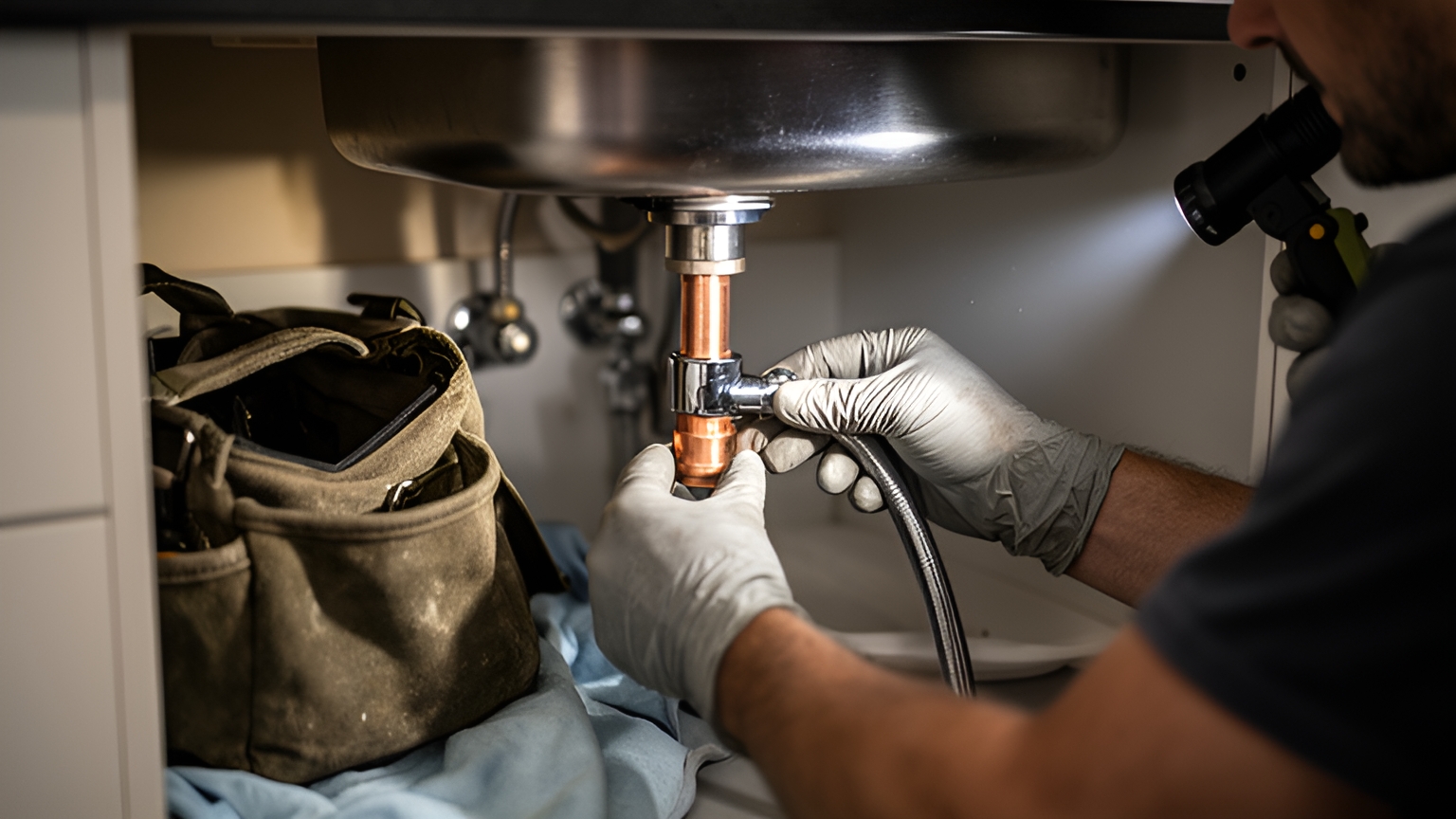
Dispatch and live van tracking that give the office a clear picture of the day
A lot of office phone time can come down to two questions: customers asking when the plumber will arrive, and the office checking where each van is up to.
Live van tracking answers both. With Locate2u's real-time tracking, the office sees every vehicle on a live dashboard, so it can tell where each plumber is and spot a job running long.
That picture supports quick, calm decisions. If a bathroom job is taking longer than booked, the next customer can be moved to another plumber or given a later time before anyone is left waiting.
Customers get their own view through a live tracking link. Instead of a broad morning or afternoon window, they can see the van on its way and be ready to open the gate, settle the dog or clear the cupboard under the bench.
Dispatch is the other half. Whoever decides who goes where should be able to see each plumber's location, remaining jobs and skills on one screen before assigning the work.
When testing a platform, check how the map, the job list and customer messages relate. A change in one should flow through to the others without anyone retyping it.
How a building supplies company built customer confidence with photo records and live tracking links
Franz Building Supplies delivers heavy and bulky building materials to construction sites, builders and trade professionals. Its customers rely on timely, accurate deliveries to keep projects on schedule.
It isn't a plumbing business, but the work has a familiar shape: vehicles heading to sites, trade customers waiting on arrival, and a need to show the job was done right.
The team wanted better visibility across its delivery operations and a reliable way to show that each delivery was completed correctly, with a clear record of what was delivered, when and where.
It also wanted to lift the overall customer experience, with a system that helped drivers stay on track and gave management a clear view of daily operations.
Franz Building Supplies adopted Locate2u's proof of delivery, which captures photo evidence, signatures and timestamps for every delivery. Drivers photograph each delivery on site, creating a record that both the company and the customer can refer to.
The team also began sharing live tracking links with customers, giving them real-time visibility of when their deliveries would arrive and setting clear expectations.
Franz Building Supplies' case study records the result for this one building supplies business in the team's own words: "What I love about Locate2u is the live-tracking features and proof of delivery. Our customer disputes dropped to nearly zero."
For a plumbing business, the same two tools map neatly onto the end of a job. A photo of the finished installation, a customer signature and a timestamp make a clear record of the work, and an arrival link means the customer is ready when the van pulls up.
A simple way to test it: for one week, have one plumber photograph every finished job and send every customer an arrival link, then compare the follow-up calls the office takes with a normal week.
Planning around rural runs, the two islands and wet-weather busy spells
New Zealand plumbing rarely happens on a neat grid. Rural runs, the Cook Strait split and fast-changing weather all shape how a day should be planned.
Rural runs. Jobs on farms and lifestyle blocks can sit a long way apart, often down gravel roads. Grouping rural work by district and day keeps the driving in proportion to the time on site.
Mobile coverage can be patchy away from towns, so ask any vendor how its app behaves with a weak signal, and test it on a job at the edge of your area before committing.
The two islands. A business with teams in both islands can plan each island as its own schedule, with its own vans and plumbers. Where stock or a specialist part has to cross Cook Strait, book the jobs that depend on it for after the ferry sailing it's on has arrived.
Wet-weather busy spells. Heavy rain and flooding can bring a run of urgent call-outs and closed roads at the same time. Conditions also vary sharply by region: NIWA describes the West Coast of the South Island as the wettest area of New Zealand and the land east of the mountains as the driest, so one region can be flat out while the next is quiet.
A weather-day plan helps. Decide in advance which booked jobs can move, which customers to message first, and how the office will re-plan around a closed road.
A practical checklist for testing scheduling and dispatch tools on your own jobs
A demo shows a platform at its best. Your own jobs show whether it fits.
Run these checks with one van over a normal week, using real addresses and regular customers who are happy to help.
| What to check | How to test it on your own jobs |
|---|---|
| Booking a job | Enter a real job with access notes and parts. Check it reaches the plumber's app without anyone retyping it. |
| Fitting in an urgent call | Add a call mid-morning. Watch how the remaining stops change and whether affected customers receive new arrival times. |
| Seeing every van | From the office, check that each van's location and remaining jobs are clear at a glance. |
| Customer arrival link | Send one to a regular customer and ask what they saw on their phone. |
| Record of finished work | Close a job with a photo, signature and timestamp, then find that record again later. |
| Links to existing tools | During a demo, watch job details pass into your accounting or quoting tool. |
| Weak mobile signal | Run a job where coverage is patchy and confirm updates arrive once the signal returns. |
| Plumber feedback | At the end of the week, ask the plumber what felt slow and adjust before rolling it out. |
Keep notes as you go. The rows your business hits every day deserve the most weight.
The quickest way to judge fit is to start small: put one plumber on the Locate2u driver app for a week, work through the checklist, and see how the day feels from both the van and the office. To talk through set-up and costs for your team, book a call with the Locate2u team.
Frequently asked questions
Can scheduling and dispatch software work alongside the accounting or quoting tool you already use?
Often, yes. Ask whether the platform offers an open API or ready-made integrations, then ask to see job details pass into your current tool during a demo; Locate2u lists its connection options on its integrations pages.
Is dispatch software worth it for a one- or two-van plumbing business?
Van count matters less than how often the day changes. If urgent call-outs regularly reshuffle booked work, or customers ring to ask when the plumber will arrive, a small team can get real value from live re-planning and arrival links.
How do you help plumbers settle into a new job app?
Start with one van for a week and keep the app to the steps that matter on site: job status, a completion photo and a signature. Ask that plumber what felt slow, adjust the setup, then roll it out to the rest of the team.
How many licensed plumbers does New Zealand have?
The NZ Herald, citing the Plumbers, Gasfitters and Drainlayers Board annual report, reported 11,974 licensed plumbers in the 2023-24 year, a count of licence holders rather than everyone employed in plumbing businesses. For planning your own team, the more useful figure is how many hours each plumber spends on site compared with driving, which a week of live van tracking will show.
