How to Choose Courier Management Software for New Zealand Runs
Drafted with AI assistance, edited and fact-checked by Sean Flannery. See our editorial policy.
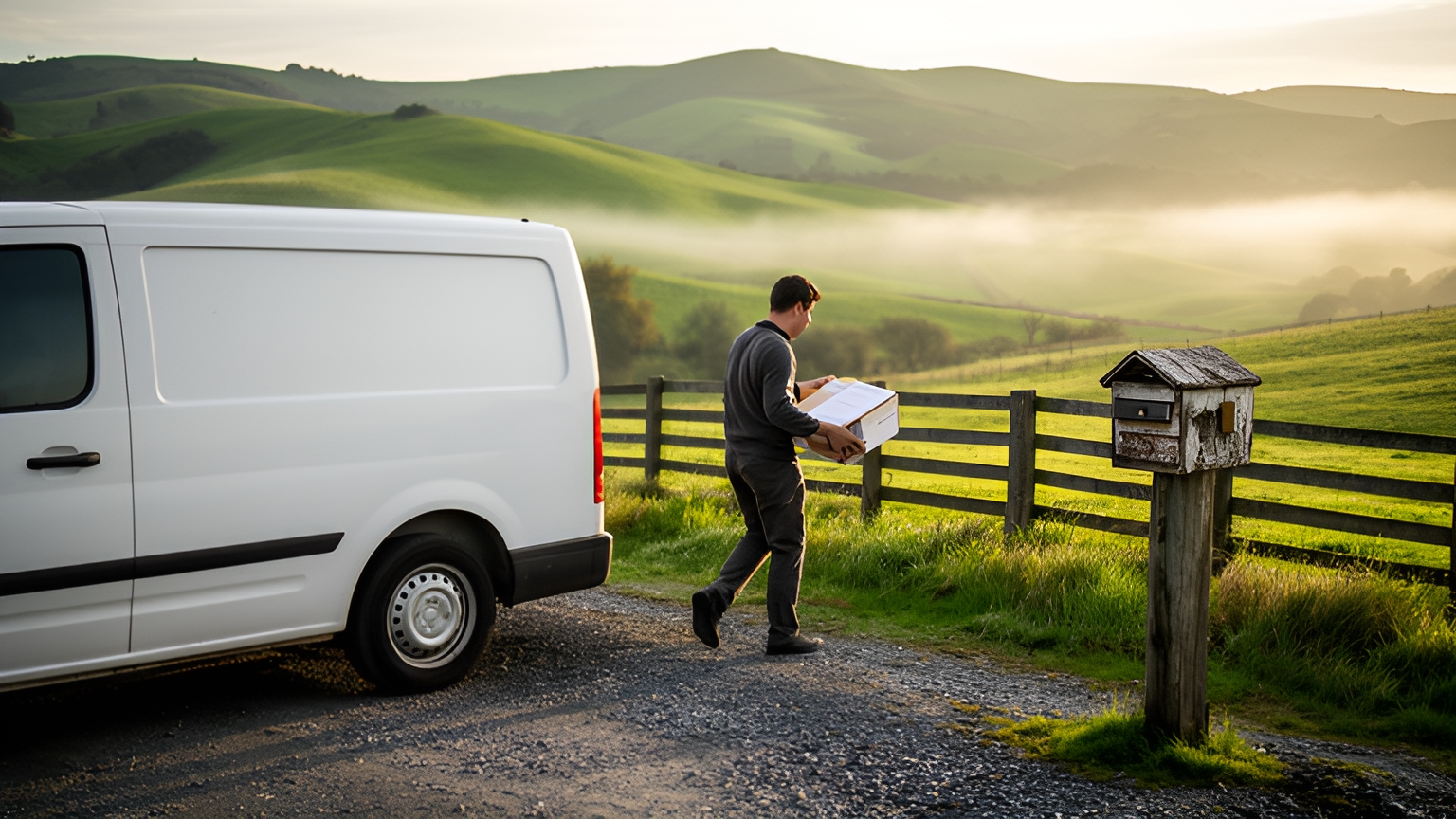
Courier management software plans, dispatches and tracks courier work from one place. It sequences stops, sends drivers their runs, shares live ETAs, captures photo proof of delivery and logs planned against actual arrival times. For New Zealand operators, that log becomes a reliability baseline built from their own runs on their own roads.
Those roads ask a lot of a single plan. One week might hold apartment drops across Auckland, a rural loop where the letterbox sits at the end of a long gravel drive, freight waiting on the Cook Strait crossing and a South Island highway that closes overnight.
A good platform handles that mix and turns each week's runs into a sharper plan for the next one.
What courier management software does for a New Zealand courier operation
At its simplest, courier management software replaces the run sheet, the whiteboard and the round of phone calls with one shared plan.
Orders come in from your website, your customers or your own team. The software groups them into runs, puts the stops in a sensible order and sends each driver their run on their phone.
Dispatch sees every vehicle on a live map. Customers get a tracking link with an ETA, so they know when to be home or when to leave the gate open. At each drop, the driver captures a photo or a signature and the time is stamped against the stop.
Locate2u brings those pieces together in one platform, with route optimisation that plans runs around delivery locations, time windows and driver availability, live tracking, proof of delivery and a driver app.
SuperPharmacy's case study reports that its delivery team cut route planning time by 83%, a result from one Australian online pharmacy rather than a New Zealand courier.
The team had been planning prescription runs by hand for up to one hour every day. When an urgent prescription arrived or a delivery needed to move, the whole route was generated again from scratch.
With Locate2u, routes are built automatically and the same planning takes just 10 minutes. New prescriptions can be slotted into existing routes during the day, which let the pharmacy offer same-day prescription delivery as a core service.
As the pharmacy team puts it: "Before Locate2u, we had to generate new routes if we wanted to change anything. Now we can adjust the day's deliveries on the fly."
You can test the same idea on your own work. Time how long your team spends building tomorrow's plan, then build the same orders on the platform you're assessing and compare the two.
Building a delivery reliability baseline from your own run data
Road reliability and delivery reliability are different measures. One describes how predictable the network is. The other describes whether your drops arrived inside the window you promised.
The first isn't something a courier can look up week to week. The Ministry of Transport's July 2026 network performance report states: "We do not currently have any appropriate and frequent measures of road reliability."
So the most useful reliability record for your business is the one your own runs produce. It reflects your routes, your customers and your blend of town and country work.
Courier management software builds that record as part of normal work. Every stop carries a planned arrival time. Every completed drop carries a timestamp from photo proof of delivery. Side by side, those two times are your baseline.
Start with these measures:
- On-time rate: the share of drops completed inside the window the customer was given.
- First-attempt success: the share of drops completed on the first visit.
- Cost per drop: what a run costs divided by the drops it completed, covered in the fuel section below.
Split the baseline by run type. An Auckland apartment run and a Waikato farm loop should never share one average, because each would hide the other's pattern.
Runs that depend on the Cook Strait crossing deserve their own line too, with the ferry arrival logged as the start of the South Island leg.
Planning dense Auckland drops and long rural legs in the same week
A dense Auckland run and a long rural run are close to being different jobs. On the first, time goes on parking, lifts and handovers. On the second, it goes on the kilometres between gates.
A 2016 global analysis of last-mile delivery, which isn't specific to New Zealand, notes that drop density matters and that "longer distances in rural areas greatly increase last-mile costs". The practical lesson for a New Zealand operator is to plan each kind of run on its own terms.
For dense metro runs, give each stop a realistic service time and cluster drops tightly by suburb. Apartment buildings, loading zones and building access all add time at the door, and your baseline will show how much.
For rural runs, the address itself needs attention. A rural delivery address doesn't always place a map pin at the right letterbox or farm gate, especially along long shared roads.
Fix it once. Confirm the drop point with the customer or the driver, save the corrected location and access notes against that customer, and keep a photo of the gate from the first delivery. Every later run then starts from the right spot.
Rural runs also suit set days. Grouping a district's drops onto the same days each week builds density where the road can't, and gives customers a delivery day they can plan around.
Rescheduling South Island winter jobs early when highway closures are forecast
When a South Island highway closes, a sensible detour may not exist. The useful decision happens earlier, before a van leaves the depot.
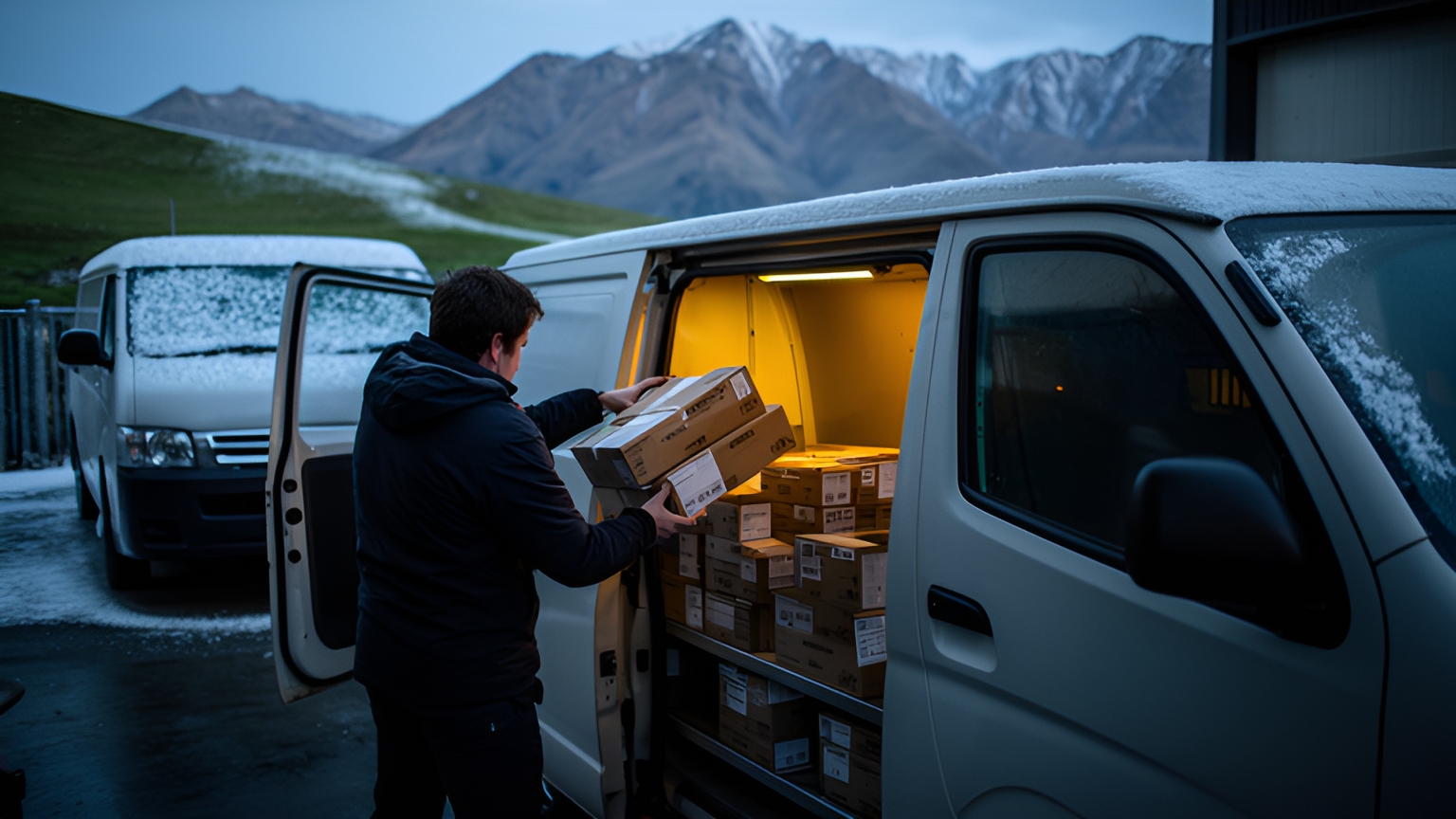
Forecast warnings usually give that window. In a July 2026 traffic bulletin, NZ Transport Agency Waka Kotahi encouraged road users across the South Island to prepare for more snow, heavy rain or ice, and pointed to "the likelihood of further state highway closures".
A short routine keeps everyone on the front foot. Check road status for tomorrow's routes in the afternoon. Pull out the jobs that rely on roads at risk. Move what can wait to the next clear day, and tell those customers their new day before they start watching for the van.
The runs that do go out are then built only on open roads, and drivers start the day with a plan that matches the conditions.
Tag those jobs as weather-affected in your records. A winter baseline that includes them tells you which windows you can comfortably promise when the next cold snap arrives.
Seeing how a fuel price change lands on each drop
Fuel can move faster than a monthly budget. A regional New Zealand news report put truck-stop diesel at NZ$3.86 a litre in early April 2026.
A fuel price change never lands evenly across your work. Cost per run hides the difference. Cost per drop shows where it falls.
A worked example makes it concrete. Assume a van that uses 10 L per 100 km. An Auckland run of 80 km with 60 drops uses 8 L. A rural run of 200 km with 25 drops uses 20 L.
| Worked example run | Fuel per drop at NZ$1.43/L | Fuel per drop at NZ$3.86/L |
|---|---|---|
| Auckland: 80 km, 60 drops, 8 L | About NZ$0.19 | About NZ$0.51 |
| Rural: 200 km, 25 drops, 20 L | About NZ$1.14 | About NZ$3.09 |
At NZ$1.43 a litre, fuel works out at about NZ$0.19 per Auckland drop and NZ$1.14 per rural drop.
In per-drop terms the Auckland run barely shifts. The rural run is where the change shows, so it's the first one to review: re-price it, combine it with neighbouring drops or move it to fewer, fuller days.
To do this with real work, you need distance travelled and drops completed for each run. Ask to see both in the reporting of any platform you assess, then rerun the sum whenever the fuel price moves.
Slotting same-day orders into live routes without replanning the day
Same-day orders are good business, as long as they don't unpick the morning's plan.
The skill is insertion. A new job goes into the run that passes closest, at a point where that driver still has time and space, and only the stops after it move.
That's what made the difference in the pharmacy story above. Once new jobs could join existing routes, same-day delivery became a regular service instead of a fresh plan each time.
In Locate2u's dispatch planning, new jobs can be added to routes already on the road without rebuilding the rest of the day.
Set a same-day cut-off for each area that reflects where your vans usually are by late morning. An order near an active run is easy to add. One across the harbour from every van may suit tomorrow's first run better.
Leave a little room in the runs that cover areas where same-day orders tend to come from. Your baseline will show which areas those are.
Check vehicle space as well as time. A bulky same-day item may fit the run with the emptier van rather than the nearest one.
And confirm that customers whose arrival times shift receive an updated ETA, and that the new stop reaches the driver's app in order, so nobody needs a phone call mid-run.
Setting realistic time windows that support drivers through the whole shift
A delivery window is two things at once: a promise to a customer and a plan for a driver's day. Built from driving time alone, it leaves no room for the rest of the job.
A realistic window covers the whole task. Loading at the depot. Finding the right door or gate. The handover, the photo and the signature. Breaks. Plus an allowance for weather, roadworks and slow traffic.
Your baseline does most of the estimating. If planned against actual times show that drops in part of Wellington's CBD take longer than the plan allows, lengthen the service time for that area. The plan adjusts to the work, and the driver isn't left chasing the clock.
Put breaks into the plan as fixed blocks rather than whatever gap is left over. For work time and rest requirements, check the current rules with NZ Transport Agency Waka Kotahi and build them into every plan.
Receiver availability counts too. A trade customer may only accept deliveries in business hours, and a farm drop may need a gate code or someone at the shed. Saving those details against the customer keeps each window achievable.
The Locate2u driver app gives each driver their run in order and captures proof of delivery at every stop, so the day's actual times flow back into next week's windows.
Questions to ask when comparing courier platforms for New Zealand conditions
A feature list only tells part of the story. The clearest test is your own New Zealand work, so ask each platform to answer these on your routes and your addresses.
| Question to ask | What a clear answer looks like |
|---|---|
| Does the driver app keep working where there's no mobile coverage? | The driver can see the run and capture proof at a rural drop, and the record syncs when signal returns. |
| Can a rural address be corrected once and saved? | The fixed drop point and access notes stay with the customer for every later run. |
| Can a ferry or linehaul leg sit in the plan as a fixed, timed step? | South Island runs are planned from the expected arrival, and actual landing times are recorded. |
| Can contractors and owner-drivers work on their own phones? | A contractor receives a run and captures proof of delivery, and access is removed cleanly when the contract ends. |
| Does reporting show planned against actual arrival times? | On-time rate, first-attempt success, distance and drops per run, split by run type. |
| Can same-day jobs join routes already on the road? | A new order slots into a live route and only the later stops move. |
| How do orders get in, and how long does setup take? | Orders arrive from the systems you already use, and you see your own data in a working plan before committing. |
For a wider view of what delivery platforms cover beyond courier runs, the guide to delivery management software walks through the full feature set.
To see these questions answered on your own routes, and to talk through cost, book a call with the Locate2u team.
Frequently asked questions
How should you plan deliveries that cross Cook Strait?
Treat the ferry crossing as a fixed, timed leg and plan South Island runs from the expected arrival window rather than the North Island dispatch time. Recording when freight actually lands lets the next week's South Island windows start from real handoff times.
What can you do when a rural address won't pin correctly on a map?
Confirm the drop point once with the customer or driver, then save the corrected location and access notes against that customer so every later run uses it. A photo of the gate or letterbox at the first delivery gives the next driver a clear reference.
Can owner-drivers and contractors run on the same courier platform as employed drivers?
Ask any platform you test to show a contractor added as a driver on their own phone, receiving a run and capturing proof of delivery. Also check how access is removed when a contract ends, so customer details stay with your business.
How long should you collect data before trusting your on-time baseline?
Collect at least a few weeks of normal trading that includes a busy period and, if possible, a weather-affected week. A baseline built only on quiet weeks will set delivery windows your team can't hold in winter or at peak.
The right platform is the one that plans your real mix of Auckland, rural and inter-island work, then turns each week's arrival times into a better plan for the next. A good first step is to see how Locate2u's route optimisation handles a week of your own orders, time windows and drivers.
