Real Time Tracking Myths
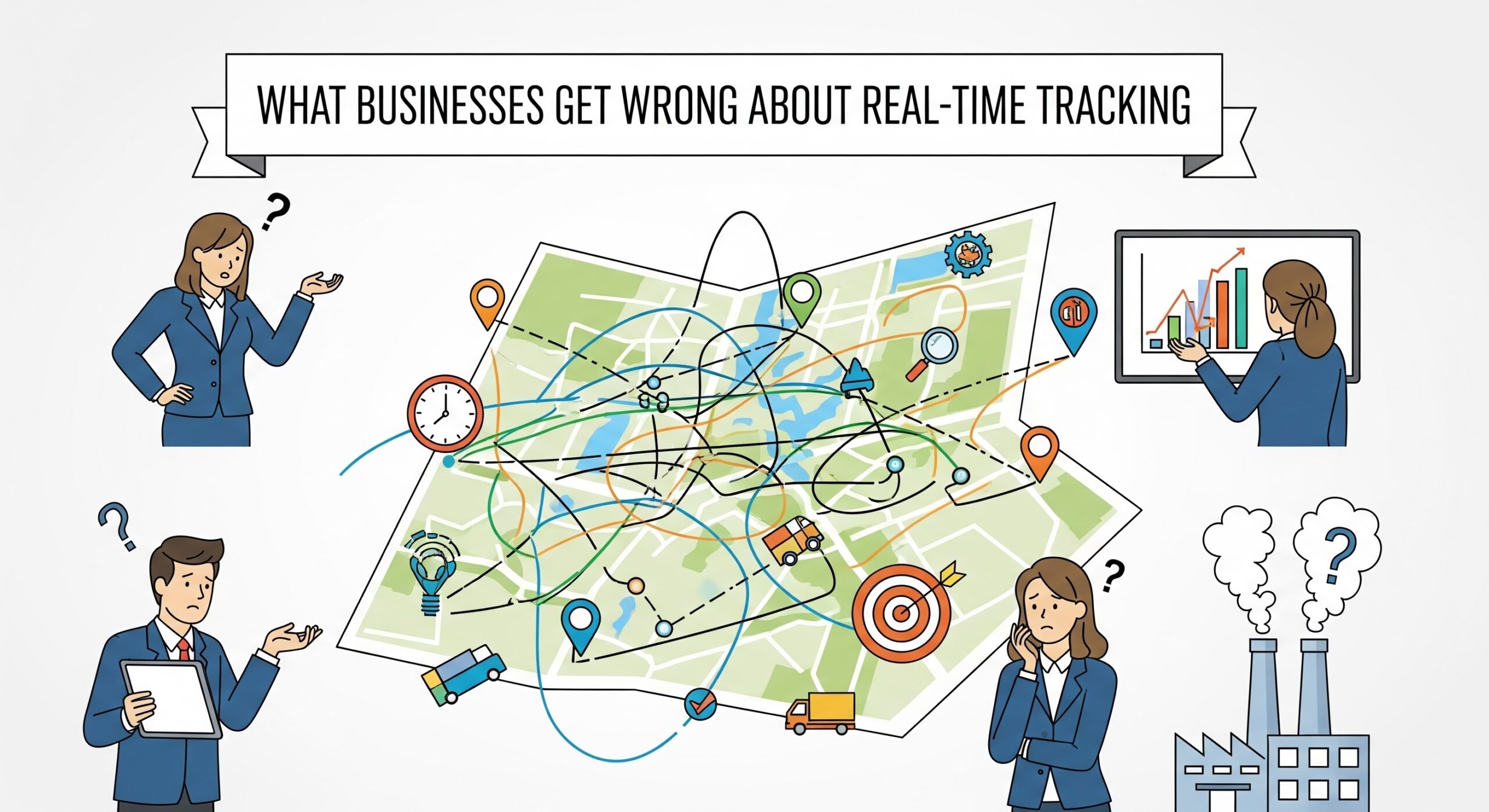
Managing a fleet on a tight budget is stressful enough without bad advice getting in the way. You are constantly juggling driver schedules, traffic congestion, and customers who want to know where their order is right now. Real-time tracking solves these problems, yet many business owners hesitate to adopt it because of outdated beliefs that no longer reflect how the technology actually works.
Industry data suggests that businesses using real-time fleet tracking see an average reduction of 10 to 15 percent in fuel costs and up to a 25 percent improvement in on-time delivery rates. Despite these proven benefits, misconceptions persist. Here are the biggest myths holding businesses back, and the reality behind each one.
Myth 1: Real-time tracking is just surveillance
The most common objection to real-time tracking is that it turns fleet management into employee surveillance. Drivers worry that every minute of their day is being monitored, and some managers are reluctant to introduce a tool that could damage team morale.
The reality is that well-implemented tracking is about operational support, not policing individual behaviour. When a driver is stuck in unexpected congestion, a dispatcher with real-time visibility can see the delay and adjust the schedule immediately, reassigning downstream stops or notifying affected customers. Without tracking, the dispatcher only learns about the problem when the customer calls to complain.
How tracking protects drivers
Tracking creates a digital record of exactly when a driver arrived at and departed from each stop. This record becomes powerful evidence when a customer makes an unfair complaint. If someone claims their delivery never arrived, proof of delivery data with GPS coordinates and timestamps proves the driver did their job correctly.
Drivers also benefit from optimised routes that reduce unnecessary kilometres and help them finish their shifts on time. When the technology is positioned as a support tool rather than a surveillance mechanism, driver buy-in follows naturally.
Building trust with your team
The key to overcoming the surveillance objection is transparency. Involve drivers in the conversation before rolling out tracking. Explain what data is collected, how it is used, and what it is not used for. When drivers understand that the system helps them get home on time and protects them from false complaints, resistance typically fades. Companies that communicate openly about tracking report higher driver satisfaction and lower turnover rates compared to those that introduce it without explanation.
Myth 2: It is too expensive and complex to set up
There was a time when fleet tracking required expensive hardware installations, dedicated servers, and months of setup. Legacy systems were clunky, required specialist IT support, and came with price tags that only large enterprises could justify. See how Gate Gourmet manages enterprise airline catering with Locate2u.
That era is over. Modern cloud-based tracking platforms run on the smartphones your drivers already carry. There is no hardware to install, no servers to maintain, and setup can happen in days rather than months. Many platforms, including Locate2u, offer subscription-based pricing that scales with your fleet size, making real-time tracking accessible to businesses running as few as three or four vehicles.
The cost argument falls apart
When you calculate the actual return on investment, the cost objection collapses quickly. Consider the savings from reduced fuel consumption through optimised routes, fewer overtime hours because drivers finish on schedule, and fewer missed delivery windows that trigger expensive re-delivery attempts.
Research indicates that the average failed delivery costs between $17 and $20 when you account for fuel, driver time, and customer service overhead. A business experiencing just five failed deliveries per day is losing over $400 per week. Real-time tracking and route optimisation directly reduce these failures, often paying for the entire platform subscription within the first month.
Getting started is simpler than you think
You do not need to overhaul your entire operation overnight. A practical approach is to start with a pilot group of three to five vehicles. This allows you to measure results, identify any workflow adjustments needed, and build an internal case study before expanding to the full fleet. Most businesses see measurable improvements within the first two weeks of a pilot.
Myth 3: The data is unreliable or overwhelming
Some managers avoid tracking because they imagine staring at a screen full of moving dots, drowning in raw data with no clear way to act on it. They worry about GPS accuracy, data latency, and the time required to make sense of all the information coming in.
Modern tracking platforms are designed to filter noise and surface only the information that matters. You do not need to watch every vehicle every second of the day. Good software works on an exception basis: it flags late arrivals, route deviations, extended stop times, and other anomalies so you can focus your attention where it is actually needed.
Actionable insights, not data overload
The most valuable aspect of tracking data is not real-time dot-watching but the patterns it reveals over time. Weekly and monthly reports can show you which routes consistently run late, which drivers are most efficient, where customer complaints cluster geographically, and how your fleet utilisation compares to capacity.
These insights drive operational improvements that compound over time. A business that reviews its tracking data weekly and makes small, data-informed adjustments will consistently outperform one that relies on gut feel and anecdotal feedback from drivers.
GPS accuracy in 2026
GPS accuracy has improved dramatically. Modern smartphone GPS, enhanced by assisted positioning and network triangulation, provides accuracy within a few metres in most urban and suburban environments. The days of unreliable, laggy tracking data are behind us. Updates refresh in seconds, giving dispatchers and customers a near-instant view of where each vehicle is.
Real-time tracking in practice
Consider a regional appliance retailer struggling with late deliveries. Their support team is overwhelmed every afternoon with customers calling to ask where their order is. After implementing tracking, dispatchers can see delays developing in real time and adjust routes mid-day. The system sends automated text messages to customers with updated arrival times, eliminating the need for most inbound calls.
The result is a smoother day for dispatchers, drivers, and customers. Support call volumes drop, on-time delivery rates climb, and customer satisfaction scores improve, all from a single change in how the business manages visibility over its fleet.
Getting started with your fleet
If you have been holding back on tracking because of any of these myths, here is a practical path forward:
- Define your goals: Be specific about what you want to fix. Reducing overtime? Cutting customer complaints? Improving on-time rates? Clear goals help you measure success.
- Run a pilot: Start with a small group of vehicles to prove the value before a full rollout.
- Involve your drivers early: Explain how the technology benefits them personally. When drivers understand the "why," adoption is much smoother.
- Review data weekly: Do not just install the system and forget it. Schedule a weekly review to act on the insights the platform provides.
- Scale gradually: Once the pilot proves results, expand to the rest of your fleet with confidence.
Locate2u makes this process straightforward with a driver app that runs on any smartphone, real-time tracking dashboards for dispatchers, automated customer notifications, and route optimisation that ensures your fleet operates at peak efficiency. The myths about real-time tracking belong to a previous era of technology. The businesses that move past them gain a significant operational advantage over those that do not.
Related Articles
Strategies for Fleet Management Software
In the fast-moving world of fleet management and vehicle tracking, strategies for fleet management software has emerged as a defining factor for...
5 Ways Fleet Management Software Can Boost Fuel Efficiency
In the fast-moving world of fleet management and vehicle tracking, 5 ways fleet management software can boost fuel efficiency has emerged as a defining...
Fleet Management Features
In the fast-moving world of fleet management and vehicle tracking, fleet management features has emerged as a defining factor for operational success....