Last Mile Delivery Communication 10 Practical Fixes to Stop Missed Updates
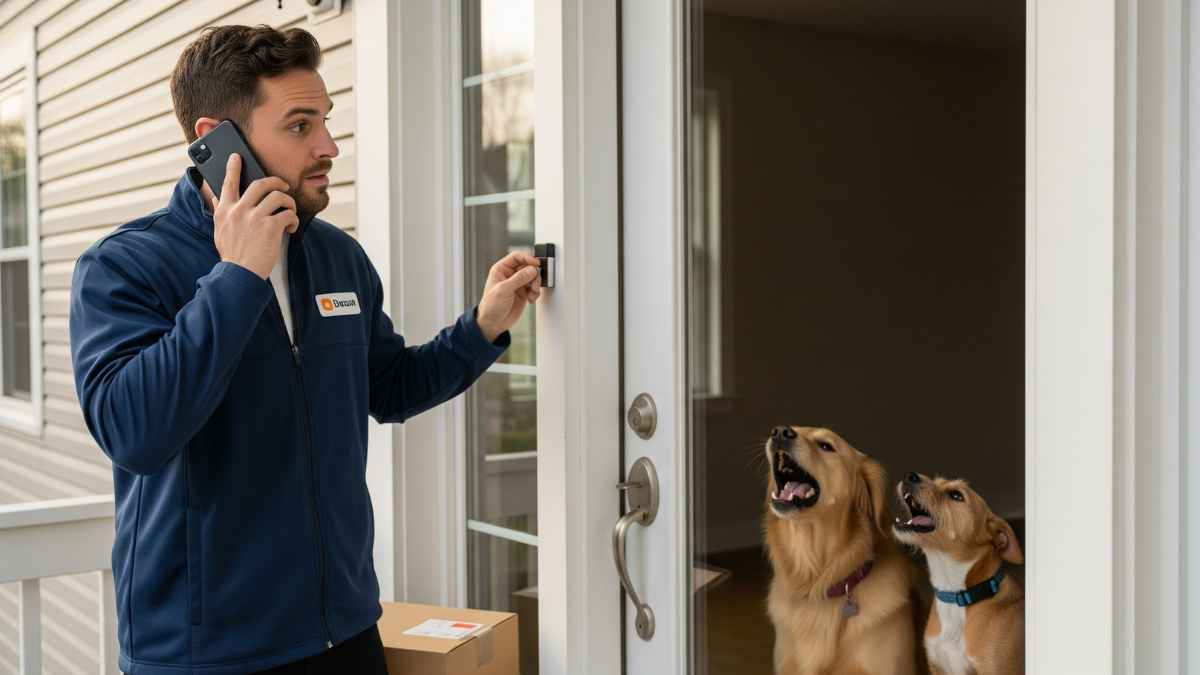
Last-mile delivery does not fall apart because the driver cannot deliver with speed or runs a few minutes late. It falls apart because nobody knows what is happening. When the customer is waiting, the dispatch officer has no visibility, and the driver is stuck at a roadblock, the phones start ringing and frustration compounds at every level.
Communication breakdowns cause missed delivery windows, repeat calls to your support team, complaints on social media, and failed drop-offs that trigger expensive re-deliveries. According to industry research, failed deliveries cost businesses an average of $17 to $20 per attempt when you factor in fuel, driver time, and customer service overhead. Multiply that across dozens of daily failures and the financial impact is severe.
The good news is that most communication problems in last-mile delivery are fixable with the right processes and tools. Here are ten practical solutions.
What is last-mile delivery?
Last-mile delivery is the final stage of the supply chain: moving goods from a depot or distribution centre to the customer's doorstep. It is also the most visible stage and the one customers judge you on. They do not call to ask how your warehouse operations are running. They call because they want a simple answer: where is my order, and when will it arrive?
If you can answer that question clearly and proactively, you reduce frustration, cut inbound call volumes, and give your team time back to focus on operations rather than firefighting.
10 ways to improve communication in last-mile delivery
1. Give customers an accurate delivery window
Wide delivery windows trap people at home for hours and trigger endless "any update?" calls. A window of "between 9am and 5pm" tells the customer almost nothing useful. Industry data suggests that tightening delivery windows to two hours or less can reduce inbound WISMO (where is my order) calls by up to 40 percent.
The key is using real planning data rather than rough estimates. When routes are optimised based on actual distances, traffic patterns, and service times, the ETAs generated are far more accurate. This means you can confidently offer a one to two hour window instead of a half-day range. Customers plan their day around your delivery, so giving them a realistic window shows respect for their time and builds trust in your brand.
2. Use real-time GPS tracking
Live location tracking keeps everyone in the loop: the customer, the dispatcher, and the driver. When people can see a delivery progressing on a map, the urge to call and ask for updates drops dramatically.
Real-time tracking also gives dispatchers the ability to spot problems early. If a driver is falling behind schedule, the dispatcher can intervene, redistribute stops, or proactively notify affected customers before they notice the delay themselves. This shift from reactive to proactive communication is one of the most impactful changes a delivery operation can make.
3. Automate delivery status notifications
Customers want to know what is happening without having to ask. Automated SMS or email notifications at key milestones keep them informed without adding work to your dispatch team. The essential notifications to send are:
- Order dispatched
- Driver en route to your address
- Arriving in approximately X minutes
- Delivery completed
You can also use geofencing so customers receive a notification when the driver enters a set radius around their address. This final proximity alert is particularly effective at ensuring someone is ready to receive the delivery, reducing failed attempts significantly.
The balance matters. Too few notifications leave customers in the dark. Too many create noise that gets ignored. Four to five well-timed messages per delivery is the sweet spot for most operations.
4. Make communication two-way
Receiving a notification is informative, but being able to respond is even better. Customers sometimes need to change instructions quickly: "leave it at the back door" or "I will be five minutes late, please wait." Drivers need a safe, structured way to handle these requests without it descending into chaos.
Two-way communication channels, whether through SMS replies, in-app messaging, or a simple callback option, give customers a sense of control and reduce the friction that leads to missed deliveries. When a customer can tell the driver where to leave a parcel, you avoid a failed delivery and the costs that come with it.
5. Standardise protocols for common situations
Certain scenarios create confusion on almost every delivery run. The customer is not home. The access gate is locked. The address is wrong. The parcel is too large for safe placement. If your drivers handle each of these situations differently every time, the result is inconsistency and customer complaints.
Develop clear, documented protocols for the five to ten most common delivery exceptions. Train drivers on these protocols and make them accessible through the driver app. When every driver handles a locked gate the same way, customers know what to expect and your dispatch team spends less time resolving ad-hoc situations.
6. Offer contactless delivery options with proof
Many customers cannot or prefer not to meet drivers at the door. Contactless delivery has shifted from a pandemic necessity to a permanent customer preference. Make it simple and safe by allowing customers to designate a safe drop location, then confirm the delivery with a photo, GPS coordinates, and a timestamp.
This combination of customer choice and documented proof protects both parties. The customer gets flexibility, and your business has evidence that the delivery was completed as instructed. Proof of delivery becomes especially important when parcels are left unattended, as it resolves disputes quickly and definitively.
7. Build route optimisation into the daily workflow
If your routes are planned manually, communication suffers because your ETAs are essentially guesses. Customers take these ETAs at face value and plan their day around them. When the estimate is wrong, trust erodes.
Route optimisation solves this by calculating efficient, realistic routes in seconds. Drivers know exactly which path to follow, and ETAs update dynamically as conditions change throughout the day. The result is more accurate promises to customers and fewer angry calls when reality does not match the original estimate.
8. Make rescheduling easy
Failed deliveries often happen because people's plans change. A customer who was going to be home at 2pm gets called into a meeting. If rescheduling requires a phone call and a 15-minute hold time, most customers will not bother, and you will end up delivering to an empty house.
Providing a simple link in the delivery notification that allows customers to reschedule with a tap saves everyone time and money. Your dispatch team gets advance notice, the driver skips an address where nobody is home, and the customer receives their order at a time that actually works. Attempting to deliver to an empty address only costs you fuel and wastes your driver's time. See how Containers for Change manages community recycling at scale with Locate2u.
9. Put delivery instructions where drivers cannot miss them
If instructions live in an email thread or a spreadsheet back at the office, they do not exist in the field. Drivers need delivery notes displayed prominently within their app for each stop: gate codes, preferred drop locations, fragile handling requirements, and any customer-specific instructions.
When these notes are attached directly to the stop in the driver app, the information is impossible to miss. This simple step eliminates a surprising number of delivery failures caused by nothing more than poor information flow from the customer to the person actually making the delivery.
10. Use proof of delivery as a communication tool
Proof of delivery is not just a record-keeping exercise. It is a communication tool that reduces disputes and clears confusion fast. A clear photo showing the parcel at the customer's door, accurate timestamps, and GPS location data turn potential disputes into resolved cases within seconds.
When a customer claims a parcel did not arrive, you can pull up the delivery record and show exactly when and where it was left. This protects your drivers from unfair complaints, saves your company from absorbing replacement costs, and gives customers confidence that their deliveries are being handled professionally.
How Locate2u brings it all together
Locate2u provides all ten of these communication capabilities within a single platform. From route optimisation and real-time tracking to automated customer notifications and digital proof of delivery, every tool works together to eliminate the communication gaps that cause missed updates, failed deliveries, and frustrated customers.
When your dispatch team, drivers, and customers are all connected through one system with accurate, real-time information, last-mile delivery stops being a source of complaints and starts becoming a competitive advantage for your business.
Related Articles
Improve Last Mile Delivery Without More Vehicles
In the fast-moving world of last mile delivery operations, improve last mile delivery without more vehicles has emerged as a defining factor for...
Last Mile Delivery Explained the Basics and Beyond
In the fast-moving world of last mile delivery operations, last mile delivery explained the basics and beyond has emerged as a defining factor for...
Last Mile Delivery Warehouses Closer to Customers
In the fast-moving world of last mile delivery operations, last mile delivery warehouses closer to customers has emerged as a defining factor for...