Delivery Van vs E Bike Delivery a Comparison
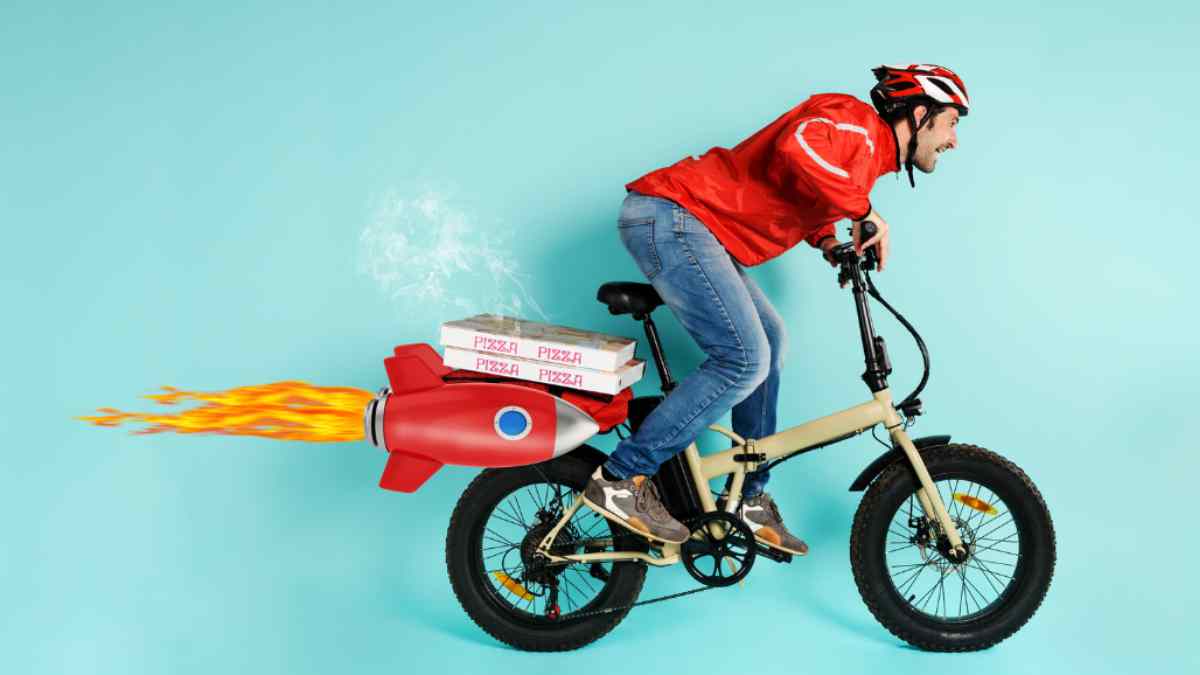
Delivery van vs. e-bike delivery is a debate that has intensified as businesses balance sustainability goals with the practical demands of getting parcels to customers on time. There is no single right answer. The best choice depends on your delivery area, parcel sizes, customer expectations, and long-term business strategy.
Urban delivery networks are evolving rapidly. Research suggests that e-cargo bikes can handle up to 50 percent of urban freight deliveries in dense city centres, while vans remain essential for suburban, regional, and bulky-item deliveries. Understanding the strengths and limitations of each option helps you make a smarter investment.
The case for e-bikes in delivery operations
E-bikes have moved well beyond novelty status. In cities across Europe, Australia, and North America, delivery businesses are deploying e-cargo bikes as a core part of their fleet strategy, not just a green marketing exercise.
Lower operating costs
The running costs of an e-bike are a fraction of what a delivery van requires. Electricity to charge an e-bike battery costs a few cents per day compared to tens of dollars in fuel for a van. Maintenance is also simpler and cheaper. There are no engine oil changes, no transmission repairs, and brake pad replacements are far less frequent thanks to regenerative braking systems.
Insurance premiums for e-bikes are typically lower than for commercial vehicles, and many jurisdictions do not require registration fees for pedal-assist bikes. For a small business running tight margins, these savings add up quickly over a year of daily deliveries. See how Husk Bakery increased deliveries by 30% with Locate2u.
Speed advantage in congested areas
In dense urban environments, e-bikes consistently outperform vans on delivery speed. Studies indicate that e-cargo bikes complete deliveries up to 60 percent faster than vans in city centres, primarily because they bypass traffic congestion, access bike lanes, and eliminate the time drivers spend circling for parking spots.
This speed advantage translates directly into more deliveries per hour and tighter, more reliable delivery windows for customers.
Sustainability and brand perception
Consumers are increasingly factoring environmental impact into their purchasing decisions. Industry surveys suggest that a growing majority of shoppers prefer brands that demonstrate sustainable practices. Deploying e-bikes for last-mile delivery sends a visible signal that your business takes sustainability seriously.
E-bikes produce zero direct emissions and dramatically reduce noise pollution, which is becoming a regulatory concern in many urban areas that are implementing low-emission zones and quiet-hour delivery restrictions.
The case for delivery vans
Despite the growing appeal of e-bikes, delivery vans remain the backbone of most delivery fleets for good reasons. Their versatility, capacity, and range make them indispensable for many types of operations.
Cargo capacity and payload
The most obvious advantage of a van is space. A standard panel van can carry hundreds of parcels or large, bulky items that simply cannot fit on an e-bike. If your business delivers furniture, appliances, large meal-kit orders, or palletised goods, vans are the only practical option.
E-cargo bikes typically carry between 100 and 250 kilograms of payload. A van can carry well over a tonne. For businesses with high-volume or heavy-item deliveries, the math clearly favours vans.
Range and coverage area
Delivery vans can cover much larger geographic areas on a single shift. While an e-bike battery might provide 50 to 80 kilometres of assisted range, a van can comfortably cover several hundred kilometres in a day. For businesses serving suburban, semi-rural, or regional customers, vans provide the reach that e-bikes simply cannot match.
Weather resilience and cargo security
Vans provide an enclosed, climate-controlled environment that protects both the driver and the cargo. In regions with harsh winters, heavy rain, or extreme heat, vans ensure deliveries continue reliably regardless of conditions. They also offer better security for high-value goods, reducing the risk of theft or damage during transit.
Branding and visibility
A wrapped delivery van is a mobile billboard. The large surface area provides significant branding real estate that reinforces your company identity every time it drives through a neighbourhood. While e-bikes can carry branding, the visual impact is considerably smaller.
Types of delivery vehicles to consider
E-bike categories
- Class 1 (pedal-assist only): Top speed around 32 km/h. Suitable for lighter parcels in flat terrain.
- Class 2 (pedal-assist with throttle): Same speed as Class 1 but with a throttle option for hills and heavy loads.
- Class 3 (speed pedal-assist): Top speed around 45 km/h. Better for covering longer distances between stops.
- E-cargo bikes: Purpose-built for delivery with front or rear cargo boxes. These are the workhorses of urban delivery fleets.
Van categories
- Compact vans: Ideal for urban deliveries where manoeuvrability and parking are priorities. Smaller cargo area but easier to navigate tight streets.
- Panel vans: Fully enclosed with no rear window. The standard choice for most courier and parcel delivery operations.
- Box vans: Feature a separate box-shaped cargo area on a chassis, providing extra volume for larger loads.
- Luton vans: Similar to box vans with an over-cab storage area. Best for bulky items like furniture and appliances.
How to choose the right delivery transport for your business
The decision between vans and e-bikes is rarely an either-or choice. Many successful delivery businesses operate a mixed fleet, using e-bikes for dense urban zones and vans for suburban and regional routes.
Consider these factors when making your decision:
- Delivery density: If most of your stops are within a tight urban radius, e-bikes may handle the majority of your volume. Spread-out suburban routes favour vans.
- Parcel size and weight: Assess your typical parcel dimensions. If most items are small to medium, e-bikes can handle them. Large or heavy items require a van.
- Customer expectations: Same-day delivery in the city centre may be faster by e-bike. Scheduled delivery windows for larger items will need a van.
- Regulatory environment: Check whether your city has low-emission zones, congestion charges, or delivery time restrictions that would make e-bikes more practical.
- Total cost of ownership: Calculate not just the purchase price but ongoing fuel, maintenance, insurance, and parking costs over a three to five year period.
- Driver comfort and safety: For long shifts or adverse weather conditions, vans provide a safer and more comfortable working environment.
Optimise any fleet with the right software
Regardless of whether your fleet runs on electricity or diesel, the routes those vehicles follow determine how efficient your operation actually is. Locate2u helps businesses optimise routes for any vehicle type, ensuring that both vans and e-bikes cover their stops in the most efficient sequence possible.
With route optimisation, real-time tracking, and automated customer notifications, Locate2u ensures your fleet operates at peak efficiency, whether you are running a single e-bike or a mixed fleet of fifty vehicles. The platform adapts to your delivery constraints, including vehicle capacity, time windows, and driver availability, so you get the best possible performance from every vehicle on the road.
The future of delivery is not about choosing one vehicle type over another. It is about building a fleet strategy that matches your customers, your geography, and your growth plans, and supporting that strategy with delivery management software that keeps everything running smoothly.
Related Articles
Delivery Management Software Guide
This comprehensive guide to delivery management software guide is designed for warehouse coordinators who want to move beyond surface-level understanding....
The Future of Proof of Delivery Photos Signatures and Beyond
In the fast-moving world of delivery operations and management, future of proof of delivery photos signatures and beyond has emerged as a defining factor...

Proof of Delivery Defence Porch Pirates
In the fast-moving world of delivery operations and management, proof of delivery defence porch pirates has emerged as a defining factor for operational...