The Future of Proof of Delivery Photos Signatures and Beyond
If you ship products or manage deliveries for clients, getting your proof of delivery right is one of the most practical improvements you can make to your operations. The transition from paperwork to digital is not just about convenience. It is about protecting your business from disputes, reducing costs, and building customer trust through documented evidence of every delivery.
When stock gets damaged or goes missing, businesses that rely on paper records spend hours searching through filing cabinets in storage rooms. By the time the right document surfaces, if it surfaces at all, the dispute has already cost you money in replacements, customer goodwill, or both. Digital proof of delivery eliminates this problem entirely.
Proof of delivery is no longer just a signature on a screen. It is becoming a comprehensive bundle of evidence: photos, timestamps, GPS coordinates, and customer confirmations, all woven into a single, clear trail that can be accessed in seconds from anywhere.
What proof of delivery really means
Traditional proof of delivery involved a customer signing a piece of paper to confirm that a delivery was completed. The courier got the signature and moved on to the next stop. That paper then had to be physically transported back to the office, filed somewhere accessible, and retrieved if a dispute ever arose, sometimes months later.
The problems with this approach are well documented. Paper gets lost, damaged, or misfiled. Signatures become illegible. There is no way to verify the time or location of delivery. And when a customer disputes a delivery, the burden of proof falls on your business with little evidence to support your case.
Modern digital proof of delivery goes far beyond the basics. A complete POD record now typically includes:
- Delivery photos: Images showing where the parcel was placed, the condition of the package, and the delivery location
- GPS coordinates: Confirming the exact location where the delivery was made
- Timestamps: Recording the precise date and time of delivery
- Driver identification: Linking the delivery to a specific driver and vehicle
- Signature or contactless confirmation: Digital signature capture or confirmation that a contactless delivery was completed
- Exception notes: Documenting situations like a locked gate, safe-drop used, or recipient unavailable
This combination of data points creates an evidence package that is far more robust than a paper signature ever was. And because it is stored digitally, it can be accessed instantly by anyone who needs it: dispatch, customer service, management, or the customer themselves.
The new baseline: photos, signatures, and timestamps
Fewer businesses are relying on a single form of proof. The baseline expectation is shifting toward multi-factor proof of delivery, where several data points are captured for every drop-off.
When signatures still matter
Digital signatures remain important for specific delivery types:
- High-value items where a chain of custody must be documented
- B2B deliveries where a receiving manager needs to acknowledge receipt formally
- Regulated deliveries such as pharmaceuticals or alcohol where age verification or identity confirmation is required
For these scenarios, a signature captures not just delivery confirmation but accountability. See how SuperPharmacy cut route planning time by 83% with Locate2u. The person who signs is accepting responsibility for the goods.
The power of delivery photos
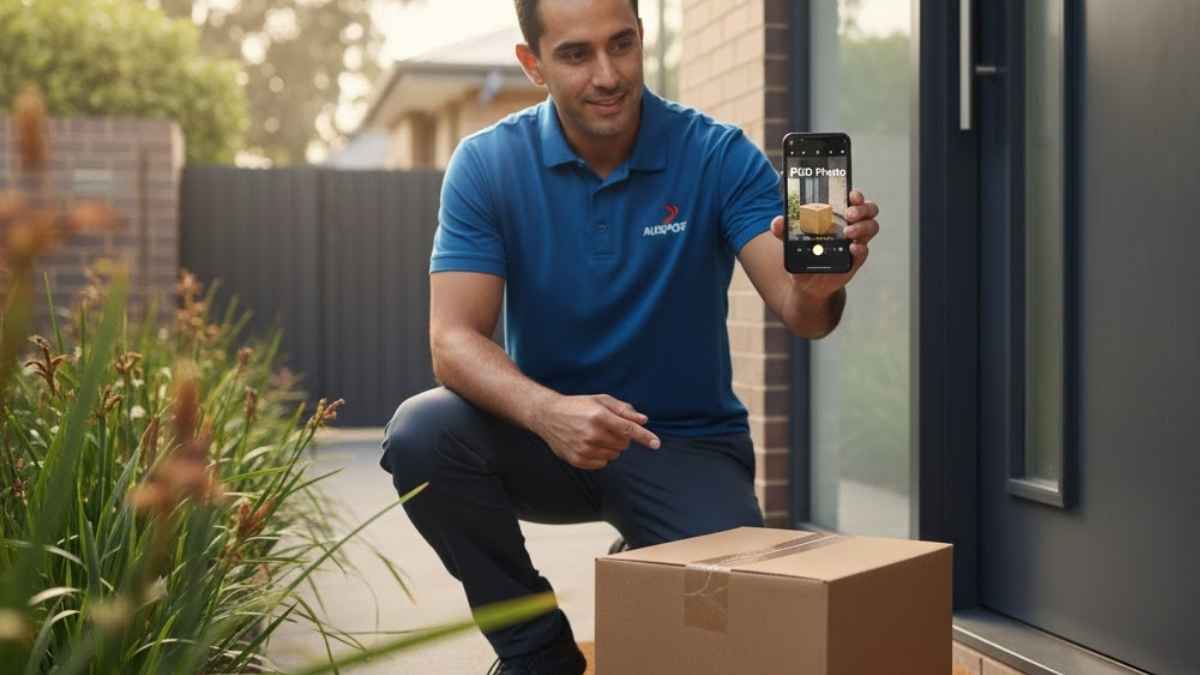
Photo proof of delivery has become one of the most effective tools for resolving disputes. A clear image showing a parcel at a customer's front door, with the house number visible, at a specific time eliminates the ambiguity that fuels most delivery complaints.
However, a poorly captured photo can be worse than no photo at all. Blurred images, photos taken from too far away, or images that do not clearly show the delivery location provide little evidential value. Training drivers to capture clear, well-framed photos takes minutes but prevents disputes that cost far more to resolve.
Best practices for delivery photos include capturing the parcel in its placed location with visible address markers, ensuring adequate lighting, and taking the photo before leaving the delivery location rather than from the vehicle afterward.
GPS and timestamps as the verification layer
GPS coordinates and timestamps serve as the verification layer that ties the photo and signature together. They confirm that the delivery was made at the correct address at the recorded time. This data is particularly valuable when a customer claims a delivery was not made. The GPS record proves the driver was at the specified location, and the timestamp confirms when.
Together, photo evidence, GPS verification, and timestamped records create what the industry increasingly refers to as "irrefutable delivery evidence." If a customer claims their parcel was not delivered, you can produce a photo showing it at their door at 2:14pm with GPS coordinates matching their address. That level of documentation resolves most disputes immediately.
Trends shaping the future of proof of delivery
Several developments are pushing POD capabilities forward and changing how businesses approach delivery documentation.
Multi-factor POD becomes standard
Rather than choosing one proof type, businesses are collecting a bundle for every delivery. Industry commentary around electronic proof of delivery increasingly emphasises the combination of signals needed to create comprehensive evidence. By 2026, businesses that capture only a signature or only a photo are falling behind the new baseline.
Smarter exception handling
The next advancement in POD is not about collecting more proof for successful deliveries. It is about capturing better proof when something goes wrong. Failed deliveries, partial deliveries, and unattended drop-offs all need structured documentation.
When a customer is not home and a driver needs to leave a parcel on a porch, the risk to the business increases. Was the parcel stolen after delivery? Was it left in a visible location? With proof of delivery protocols for exceptions, the driver captures a photo of the safe-drop location, the system records the GPS coordinates, and the customer receives a notification with the delivery photo. This documentation protects the business while giving the customer transparency about where their parcel was left.
Better standards and interoperability
As businesses expand into new regions, add delivery partners, or work with third-party couriers, POD standards need to remain consistent. A proof of delivery record captured by your own driver should have the same structure and evidential value as one captured by a partner courier.
Platforms that store POD data in standardised formats make it easier to maintain quality across multiple delivery channels. This interoperability becomes critical as you scale, ensuring that your delivery evidence holds up regardless of who actually carried the parcel to the door.
AI-assisted proof verification
Some platforms are beginning to use AI to enhance POD quality. Practical applications include automatically flagging suspicious patterns such as repeat "delivered" confirmations without accompanying photos, POD captured far from the intended delivery address, or photos that are too blurry to serve as evidence.
This automated quality checking helps operations managers catch issues early, before they become customer complaints or financial losses. Rather than reviewing every delivery record manually, the system surfaces only the ones that need human attention.
Choosing the right proof of delivery setup
The level of proof you capture should match the risk level of the delivery. Over-documenting low-risk deliveries wastes driver time. Under-documenting high-risk deliveries exposes your business to financial loss.
Low-risk deliveries
- Timestamp and delivery status update
- Basic POD record
- Automated customer notification
Medium-risk deliveries
- Photo proof of delivery
- GPS coordinates and timestamp
- Recipient notification with delivery photo
High-risk deliveries
- Digital signature required
- Photo proof of delivery
- GPS coordinates and timestamp
- ID verification or delivery notes where relevant
- Clear exception workflow for failed attempts
How Locate2u handles proof of delivery
Locate2u provides a complete digital proof of delivery system built into its delivery management platform. Drivers capture photos, collect digital signatures, and record GPS-stamped delivery confirmations directly through the driver app. All data is stored in the cloud and accessible instantly to dispatch, management, and customer service teams.
Combined with route optimisation and real-time tracking, Locate2u gives you the tools to not only complete deliveries efficiently but to document every one with the evidence needed to protect your business and build customer confidence.
Related Articles
Delivery Management Software Guide
This comprehensive guide to delivery management software guide is designed for warehouse coordinators who want to move beyond surface-level understanding....

Proof of Delivery Defence Porch Pirates
In the fast-moving world of delivery operations and management, proof of delivery defence porch pirates has emerged as a defining factor for operational...
6 Steps to Automate your Delivery Management Workflow From Order to Door
In the fast-moving world of delivery operations and management, 6 steps to automate your delivery management workflow from order to door has emerged as a...