Real Time Tracking Out for Delivery Isnt Good Enough Anymore
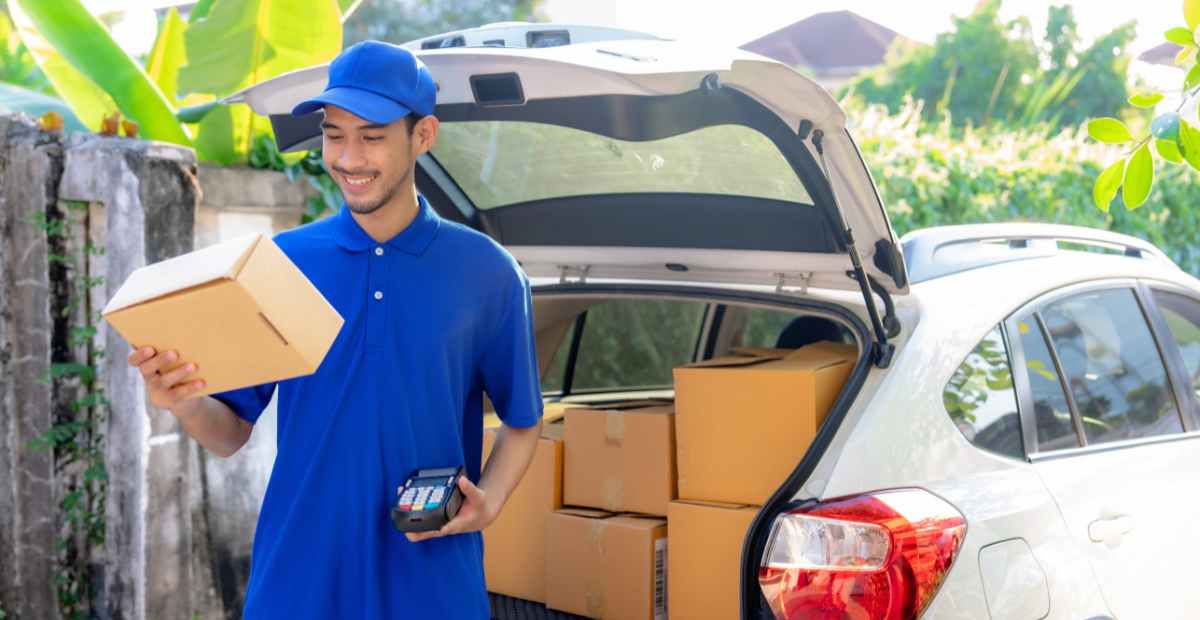
You run a furniture store, and it is a busy day on your showroom floor. Customers are browsing the latest inventory, ready to make purchases. But there are empty display spaces where new stock is supposed to be. You check your phone and see a single notification: "Out for delivery."
When exactly is this inventory going to arrive? In 30 minutes? Two hours? At the end of the day? You have no idea, and neither does your team. You cannot tell the customer looking at the empty space when the item will be available. You cannot plan your floor staff around the delivery. You are stuck waiting and guessing.
This is the problem with "out for delivery" notifications. They tell you something is coming but give you no useful information about when. In 2026, that level of vagueness is no longer acceptable to businesses or consumers.
Why "Out for Delivery" Falls Short
The "out for delivery" notification was a reasonable innovation when it was first introduced. It gave customers one more data point than they had before. But the delivery landscape has evolved dramatically, and customer expectations have evolved with it.
Here is why a simple status update is no longer enough:
- No actionable information: Knowing a package is "out for delivery" does not tell you when it will arrive. It could be the next stop or the last stop of the day. Customers and businesses cannot plan around that kind of ambiguity.
- No ability to prepare: Businesses receiving inventory need to schedule staff for unloading. Residential customers need to be home to receive packages. Without a precise ETA, people either wait around all day or risk missing the delivery entirely.
- No transparency when things go wrong: If the delivery is delayed by traffic, a vehicle breakdown, or an earlier stop running long, a static "out for delivery" notification provides no explanation. The customer is left wondering what happened.
- No differentiation: Every delivery service can send a basic status notification. It does not set your business apart or create a memorable customer experience.
Research from 2025 found that over 70% of consumers consider real-time delivery tracking an important factor when choosing where to shop. A basic status notification does not satisfy that expectation.
What Real-Time Tracking Actually Looks Like
Real-time tracking goes far beyond a status update. It gives customers and businesses a live, interactive view of the delivery as it happens. Here is what a modern tracking experience includes:
- Live map view: The customer or business can see the delivery vehicle moving on a map in real time. They can watch it approach, see how many stops are ahead of theirs, and track the estimated arrival time as it updates dynamically.
- Accurate, updating ETAs: Instead of a fixed time window, the ETA adjusts based on real conditions. If traffic slows the driver down, the ETA extends. If earlier stops are completed quickly, the ETA tightens. The customer always has the most current estimate.
- Milestone notifications: Automated alerts at key points in the journey keep customers informed without them needing to watch the map constantly. Notifications like "your driver is 3 stops away" or "arriving in approximately 10 minutes" give customers time to prepare.
- Delivery completion confirmation: When the delivery is complete, a final notification with proof of delivery, such as a photo or signature, closes the loop and confirms the order has arrived.
The Business Benefits of Real-Time Tracking
Real-time tracking is not just a customer-facing feature. It transforms how your internal operations function and delivers measurable returns across your business: See how UR Drive achieved 24/7 fleet visibility with Locate2u.
Reduced support costs
"Where is my order?" is the most common customer inquiry for delivery businesses, often accounting for 30-40% of all inbound contacts. When customers have a live tracking link, they can answer the question themselves. Businesses that implement real-time tracking typically see support call volumes drop by 25-35% for delivery-related inquiries.
Higher first-attempt delivery rates
When customers know exactly when to expect their delivery, they are far more likely to be available to receive it. This reduces failed delivery attempts, which cost between $15 and $25 each. For a business making hundreds of deliveries per week, the savings from improved first-attempt rates can be substantial.
Improved operational visibility
Real-time tracking gives your dispatch team a live view of your entire operation. They can see which drivers are ahead of schedule, which are falling behind, and where bottlenecks are forming. This visibility allows for proactive management, such as reassigning stops or alerting customers about delays before they notice.
Better driver accountability
When drivers know their progress is visible, they tend to stay on route, maintain consistent pacing, and follow delivery protocols. This leads to more predictable performance and fewer issues that require management intervention.
Competitive differentiation
In industries where many businesses offer similar products at similar prices, the delivery experience becomes the differentiator. Offering real-time tracking positions your business as professional, transparent, and customer-focused.
How to Move Beyond "Out for Delivery"
Transitioning from basic status notifications to full real-time tracking is more straightforward than many business owners expect. Here is a practical approach:
- Choose a platform with built-in tracking: The tracking capability should be integrated into your delivery management software, not bolted on as an afterthought. This ensures seamless data flow between route planning, dispatch, tracking, and proof of delivery.
- Enable automatic tracking link sharing: When a delivery is dispatched, the customer should automatically receive a tracking link via SMS or email. No manual steps for your team.
- Configure milestone notifications: Set up automated alerts at the key points that matter most to your customers. Common milestones include order confirmed, driver dispatched, a set number of stops away, and delivery completed.
- Capture proof of delivery: The tracking experience should end with a confirmation that includes evidence of delivery, whether that is a photo, signature, or both. This completes the transparency loop.
- Train your team: Make sure dispatchers understand the tracking dashboard and drivers know the importance of keeping the driver app active throughout their shift.
Locate2u Makes Real-Time Tracking Simple
Locate2u provides everything you need to move beyond basic delivery notifications. The platform includes live GPS tracking for every driver, automated customer notifications with tracking links, dynamic ETAs that update in real time, and proof of delivery with photo and signature capture.
For the furniture store owner who started this article staring at empty display spaces and a vague notification, Locate2u replaces uncertainty with clarity. You can see exactly where your delivery is, when it will arrive, and plan your operations accordingly.
"Out for delivery" was a starting point. Real-time tracking is the standard your customers expect today. Give them the experience they deserve, and watch the impact on satisfaction, loyalty, and your bottom line.
Related Articles
Real Time Tracking Myths
In the fast-moving world of fleet management and vehicle tracking, real time tracking myths has emerged as a defining factor for operational success....
Strategies for Fleet Management Software
In the fast-moving world of fleet management and vehicle tracking, strategies for fleet management software has emerged as a defining factor for...
5 Ways Fleet Management Software Can Boost Fuel Efficiency
In the fast-moving world of fleet management and vehicle tracking, 5 ways fleet management software can boost fuel efficiency has emerged as a defining...